
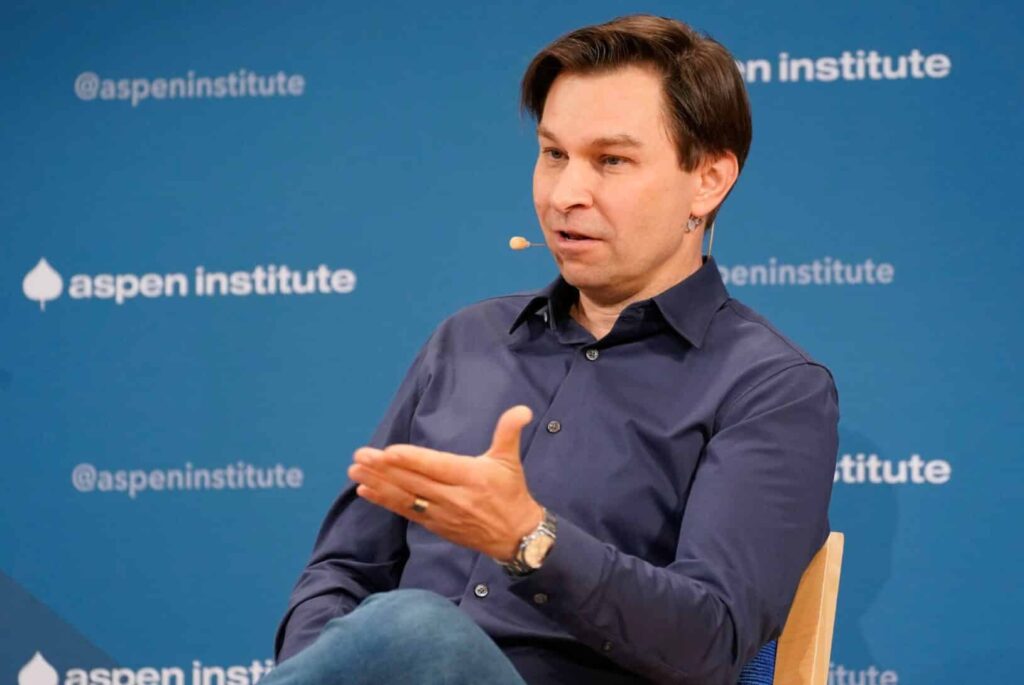
This 55-Year-Old Harvard Scientist Is the World’s Leading Anti-Aging Authority — His Shocking (But Simple) Daily Protocol Has Him Looking Decades Younger
Aging isn’t inevitable — it’s treatable.
That’s the core message from Harvard geneticist Dr. David Sinclair, one of the world’s leading experts in longevity research.
In a wide-ranging conversation with Dr. Andrew Huberman on the Huberman Lab podcast, Sinclair lays out the science behind aging as a disease — not a natural outcome of life.
His research dives deep into the mechanisms that drive aging and reveals practical strategies anyone can use to slow, or even reverse, biological aging.
Jump to: [show]
Why Dr. Sinclair Says Aging Is a Disease
The conventional view of aging treats it as an unavoidable biological process. But Sinclair disagrees. He argues that aging meets the definition of a disease — a progressive loss of function that leads to pathology and death. The only reason it’s not classified as such, he says, is arbitrary: more than 50% of people experience it.
According to Sinclair, aging is the root cause of most chronic diseases, from heart disease to Alzheimer’s. “If we didn’t age, we wouldn’t get those diseases,” he states. Research from his lab shows that reversing biological aging in tissues can restore youthful function and eliminate age-related disease in animal models.
The Epigenome: The Master Controller of Aging
At the heart of Sinclair’s theory is the epigenome — the system that regulates which genes are turned on or off in each cell. While the DNA in every cell remains the same, the epigenome determines a cell’s identity and function. Over time, that regulation degrades. The result? Cells “forget” their identity, leading to dysfunction and disease.
This loss of epigenetic information is what Sinclair calls the primary driver of aging. He compares it to scratching a DVD — the music (genetic code) is still there, but the player (epigenome) can no longer read it correctly. These “scratches” come from DNA damage, inflammation, and environmental stress.
Remarkably, Sinclair’s lab has shown that this process is reversible. In mouse models, restoring youthful epigenetic patterns turned back the clock on organ function, appearance, and lifespan.
Fast, Don’t Feed: How Fasting Reverses Aging
One of the most powerful tools for reversing aging is surprisingly simple: stop eating.
Sinclair points to numerous studies in animals and humans showing that intermittent fasting and caloric restriction activate longevity genes, including the sirtuins — a family of genes that regulate DNA repair, mitochondrial function, and stress resistance.
When insulin and glucose levels remain low (as they do during fasting), the body turns on these protective pathways. One key mechanism is the activation of SIRT1, a sirtuin gene shown to extend lifespan and delay age-related diseases. Conversely, constantly eating — particularly high-carb, high-protein meals — keeps these genes turned off.
Sinclair’s personal protocol includes:
- Skipping breakfast and eating within a 2-hour window in the evening.
- Staying hydrated with water, tea, or black coffee.
- Occasional 2- to 3-day fasts, which further activate autophagy — a cellular “deep-cleaning” process linked to reduced disease and extended lifespan.
He emphasizes that hunger itself is beneficial: “We live in a world now where some people never experience hunger — and it’s really, really bad for them,” he says.
The Importance of Pulsing Nutrition
Interestingly, Sinclair does not believe in chronic deprivation. Instead, he promotes a “pulsing” approach, alternating between periods of fasting and feeding. This mimics the evolutionary cycle of feast and famine and helps optimize both longevity and vitality.
Pulsing also applies to supplements. For example, Sinclair’s early research with resveratrol (a compound in red wine) showed that dosing it every other day extended lifespan in mice — while daily use had little effect.
This rhythm allows the body to respond dynamically rather than adapting and becoming resistant to the benefits.
The Power of Supplements: Resveratrol, NMN, Metformin, and More
Sinclair’s longevity stack includes a few key compounds that support epigenetic health and mitochondrial function:
1. Resveratrol
- Activates sirtuins and mimics the effects of fasting.
- Must be taken with fat (like olive oil or yogurt) to be absorbed.
- Typical dose: 1,000 mg daily, first thing in the morning.
2. NMN (Nicotinamide Mononucleotide)
- A precursor to NAD+, a molecule essential for energy metabolism and sirtuin activation.
- NAD+ levels decline with age; NMN supplements help restore it.
- Clinical data suggests NMN doubles NAD+ levels in 2 weeks.
3. Metformin
- A diabetes drug shown to extend lifespan in animals and reduce risk of cancer, dementia, and heart disease in humans.
- Works by mimicking low energy states, triggering AMPK and sirtuin pathways.
- Sinclair takes it in the morning but skips it on workout days to avoid reduced stamina.
4. Berberine
- A plant-based alternative to Metformin.
- Increases insulin sensitivity and mimics caloric restriction.
- Safe and effective, though less researched in humans.
Muscle, mTOR, and the Longevity-Vitality Tradeoff
Resistance training and protein intake activate mTOR, a growth-promoting pathway. While good for muscle, mTOR activation may accelerate aging if left unchecked.
Sinclair cautions against constant mTOR activation, especially with frequent leucine or growth hormone use. Instead, he recommends “pulsing” protein intake — occasionally spiking mTOR to maintain muscle, but returning to low mTOR states for repair and longevity.
Puberty, Growth, and Rate of Aging
Interestingly, early onset puberty may correlate with faster aging. Sinclair explains that growth hormone, while essential for development, is pro-aging in adulthood. Slower maturation often predicts longer life — as seen in dwarf mice and human populations with genetic growth hormone deficiencies.
The Bottom Line
Aging is not fate — it’s a treatable, reversible process driven by cellular information loss. According to Dr. David Sinclair, most of your longevity is in your hands — not your genes.
The key strategies?
- Fast regularly to trigger longevity pathways.
- Avoid constant feeding and high-protein meals.
- Pulse supplements and nutrients to mimic ancestral rhythms.
- Support your body with targeted compounds like NMN, resveratrol, and Metformin.
- Exercise, but time your efforts to complement — not conflict with — your protocols.
As Sinclair puts it: “If you don’t enjoy life, what’s the point?” Optimizing longevity doesn’t mean sacrificing vitality — with the right strategies, you can have both.